
Observability's Hidden Debt, Beyond Downtime

By Minutus Computing|April 03, 2026|5 min read

Bad observability doesn't just make incidents slower to resolve.

It erodes deployment confidence, burns out your best engineers, fragments your team culture, slows your product velocity, and quietly destroys customer trust. Let's look at various consequences…

It's a quarterly engineering review. The VP of Engineering is presenting to the CTO.
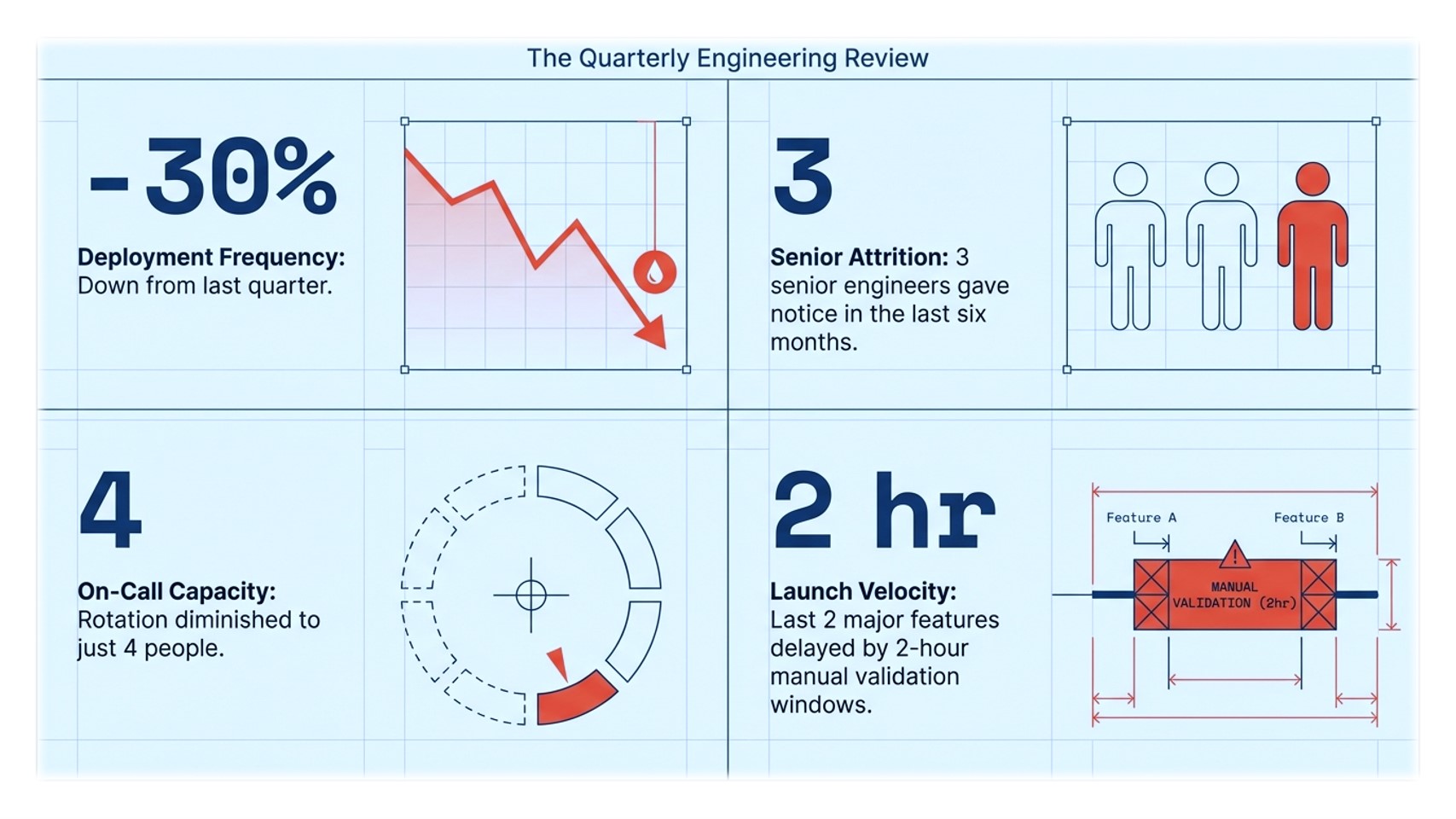
Quarterly engineering review: leadership and organizational impact

What we see usually: people talk about "Team Capacity", "Process Maturity", "Engineering Culture", and so on, but rarely "Observability".

The observability gap doesn't announce itself. It disguises itself as other problems until someone connects the dots. I try to connect the dots across five dimensions of organizational impact.
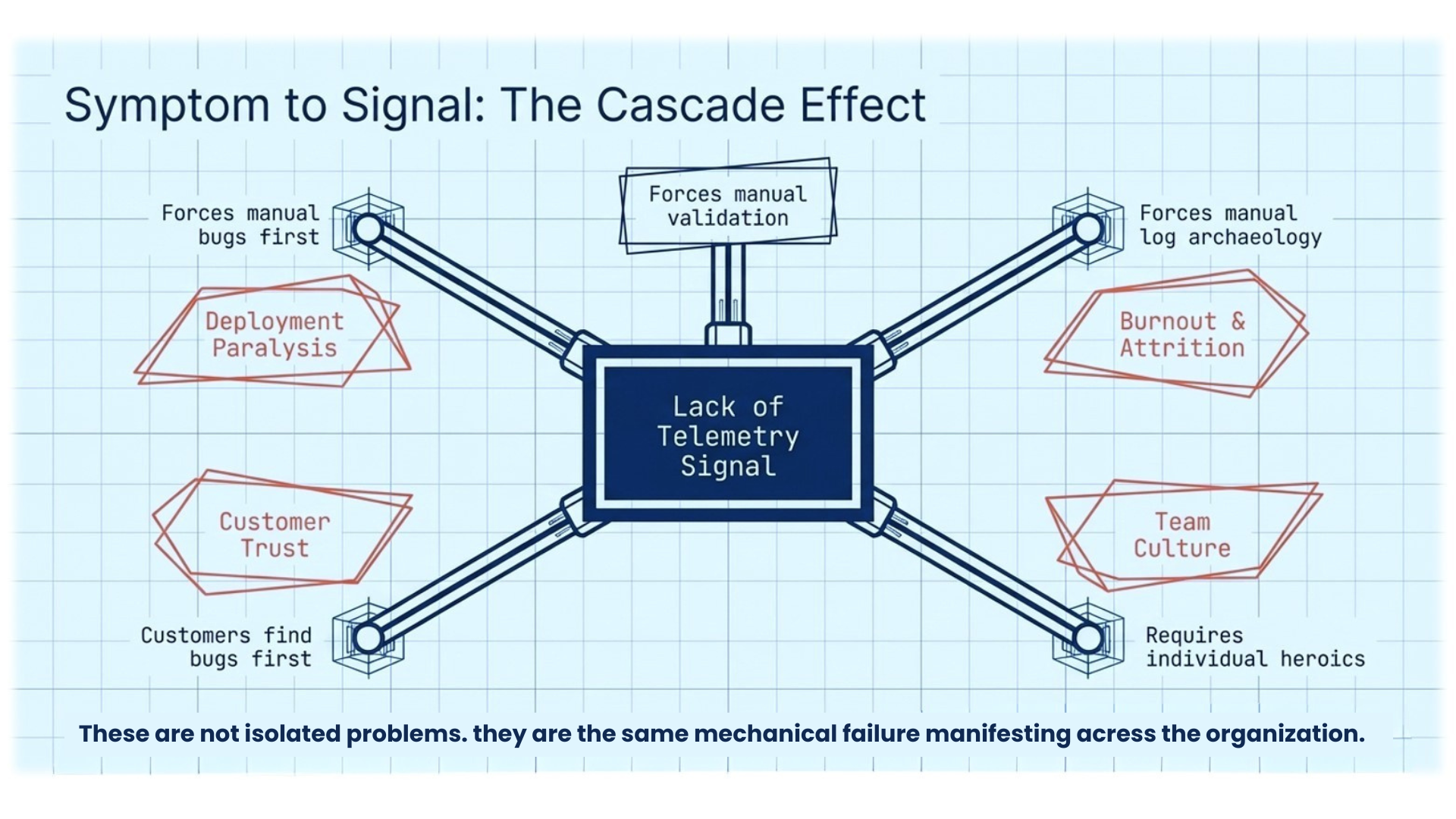
Teams with poor observability deploy less frequently, not because they lack skill, but because they lack signal.

This isn't caution. It's paralysis. Without correlated telemetry tied to the deployment event, engineers have no objective signal that a deployment is safe, so they substitute human vigilance for automated detection.

  • Releases move to low-traffic evening windows.
  • Every deploy is followed by a manual soak period: someone watching dashboards for 30-60 minutes before standing down.
  • Feature flags stay on indefinitely because nobody wants to be the one who removed the rollback option.

Before leading with cost savings, try to find answers to these five questions for your next leadership review…

  1. If a P1 occurred right now, how long would it take your on-call engineer to identify the root cause service?
  2. In your last five incidents, what percentage of total incident time was investigation versus remediation?
  3. How many engineers have reduced or declined on-call participation in the past six months?
  4. What is your current deployment frequency, and is it trending up or down?
  5. In your last three releases, how long was the manual validation window before the team stood down?
Deployment frequency, release validation, and engineering leadership

These are not observability questions. They are organizational health questions. The answers will tell you clearly whether your team has an observability gap.

Where do you stand?

Observability isn't just a tooling decision; it's a reflection of how your organization operates. If you're looking to evaluate or improve your approach, connect with us at sales@minutuscomputing.com.